
Louisville Previous Residents by Era
Different records answer different parts of a Louisville address history. The PVA card establishes today's parcel and assessed owner. Recorded deeds connect that owner to earlier sellers, while city directories, census schedules, and death records help identify people who occupied the property. Start with the source closest to the period in question, then confirm the same name and address in another dated source.
| Source | Local Coverage | Where Held | What It Shows |
|---|---|---|---|
| Clerk online land index | August 1984 forward | Jefferson County Clerk | Recorded parties, instrument dates, book/page, and images |
| ArcaSearch deed archive | 1966 to 1984 | Clerk archive | Older deed-index and image bridge |
| City and street-index directories | 1832 forward; address index from 1884 | LFPL, Metro Archives, KHS, Filson | Occupants, addresses, occupations, and name forms |
| Federal census | Historical schedules through 1950 | LFPL and archive databases | Decennial household snapshots under the 72-year rule |
| Sanborn maps | 1892, 1905, 1928/29, 1940/41, 1961 | Filson; Metro Archives from 1905 | Building footprint, use, stories, and lot context |
| Obituary index | 1918 to 1987 | LFPL/Kentucky Digital Library | Surname and date lead to a notice |
For a recent transfer, begin online. For work before 1966, take the last known book/page or legal description to the Clerk's Deed Room, Metro Archives, or KDLA. For occupants who were not owners, move to the directory and census layer. Those handoffs prevent a failed web search from being mistaken for proof that no earlier record exists.
Start Louisville Address History Today
The free Jefferson County PVA Property Search accepts an address or parcel ID. A street-only entry can return the road, and an address range can narrow a segment. Save the situs address, parcel ID, assessed owner, value, acreage, neighborhood, and the card's update date. The situs is the parcel's physical location; a mailing address, when shown, is where tax mail goes. The two may differ.
Owner, legal, and sales tabs are subscription functions, though expanded access is available at the PVA office and LFPL branches. The free card is still the best first anchor because its parcel ID follows the land even when a street number changes. It does not prove who sleeps at the address, so treat the owner as the first deed-search name, not as a complete list of past residents.
Walk Louisville Deeds Backward
The Jefferson County deed chain tracks recorded ownership, not every occupant. Use the current assessed owner as a buyer name in the Clerk's Party Name search. A grantor is the seller or giver; a grantee is the buyer or recipient. Each valid conveyance should point to the party who held the same legal property before it.
- Copy the current owner, parcel ID, situs address, and legal-description clues from PVA.
- Search that owner as Grantee-Buyer, filter for a deed, and open the likely purchase record.
- Record the prior grantor, dates, book/page or control number, and full legal description.
- Search that seller as an earlier grantee. Continue only while the parcel description and dates agree.
- At the online boundary, carry the last book/page and description to ArcaSearch or the Deed Room.
- Grantor / grantee
- The party transferring an interest and the party receiving it.
- Chain of title
- The linked sequence of recorded transfers for the same property.
- Legal description
- The lot, block, subdivision, condominium, or metes-and-bounds text that identifies land more reliably than a street number.
Louisville's Two Deed Windows
The Clerk's Online Land Records page places the current index at August 1984 forward and links the 1966 to 1984 ArcaSearch archive. Search names on the correct side of the boundary, and keep every control number, book/page reference, and image link.
No precise pre-1966 online cutoff appears in the inspected current pages. Older Louisville work belongs in deed books, plats, microfilm, or a research request. The Deed Room at Metro Hall, Room 204, handles deeds, mortgages, liens and releases, plats, wills, name changes, and related records. Staff may be reached at 502-574-6220. A lien, mortgage, easement, or power of attorney can explain a name hit without marking a sale.
Louisville's 1909 Number Trap
A missing directory entry may reflect a new number, not a move. The Filson house-history guide gives a concrete Louisville example: Benjamin Gerwing boarded at 1601 S Clay before the 1909 renumbering and at 801 S Clay afterward. His occupation also remained a useful match. Search both numbers and keep the street name, nearby intersections, parcel, and legal description in the notes.
The same rule applies when streets are renamed, parcels split, lots become condominiums, or postal labels shift. A legal description often bridges the change. This Louisville quirk is why an address-only search can make previous residents seem to vanish even when a directory trail continues.
Keep a small concordance for each change: old number, new number, directory year, printed occupant, parcel ID, legal description, and a nearby cross street. That record makes it easier to test the same property in the next volume without forcing two similar addresses into one history.
Map the Louisville House Itself
Sanborn fire-insurance maps add a structure timeline beside the people trail. Filson holds Louisville runs for 1892, 1905, 1928/29, 1940/41, and 1961, while Metro Archives describes maps from 1905 onward. Compare sheets to date changes in footprint, use, height, or lot layout. The maps do not name occupants.
LOJIC historic imagery offers later visual checkpoints, and Metro permit or code files can date an addition, demolition, change of use, or other work. The current Accela system does not include Metro311 requests before June 19, 2019. An empty result cannot prove that no older work occurred. Pair every structural date with a deed, directory, permit, obituary, or probate record before tying it to a person.
Louisville Records Beyond the Web
Several custodians carry the trail when a search screen goes quiet. Louisville Metro Archives reports city and suburban directories from 1832 to 2000, with a Civil War-era gap, plus land, marriage, will, tax, map, naturalization, and municipal records. Its microfilm inventory includes Jefferson County land and tax rolls, marriage bonds and registers, probate series, and naturalization indexes split A-L and M-Z. Bring an exact name, date span, street number, parcel clue, and known book/page whenever possible.
The Filson Historical Society adds Louisville directories, house-history guidance, Sanborn maps, and older Jefferson records. Its listed holdings include a death register for 1866 to 1910, marriages from 1784 to 1915, wills and estate records, tax records, census schedules, and court order books. The Kentucky Department for Libraries and Archives offers request forms for state-held records, with a published four-to-six-week estimate. Each repository should confirm whether the needed item is open, indexed, digitized, on microfilm, or request-only.
A current preservation effort adds one more caution. In May 2026, the Jefferson County Clerk announced a Historic Records Project with the Filson Historical Society after newly identified records required review, preservation, and cataloging. “Found,” “cataloged,” “digitized,” and “searchable” are different stages. Ask about the collection rather than assuming it has reached an online index.
Louisville Life-Event Endpoints
A departure from a directory may lead to an obituary, death record, marriage record, or estate file. LFPL's obituary index covers 1918 to 1987 and supplies a surname/date lead, but it is not exhaustive. Jefferson wills, probate material, cemetery records, and historic city death books can identify family or fiduciary roles. Such records explain an endpoint; they do not prove the person stayed at the property until that date.
The Kentucky birth-record page shows the official state route for records from 1911 forward.
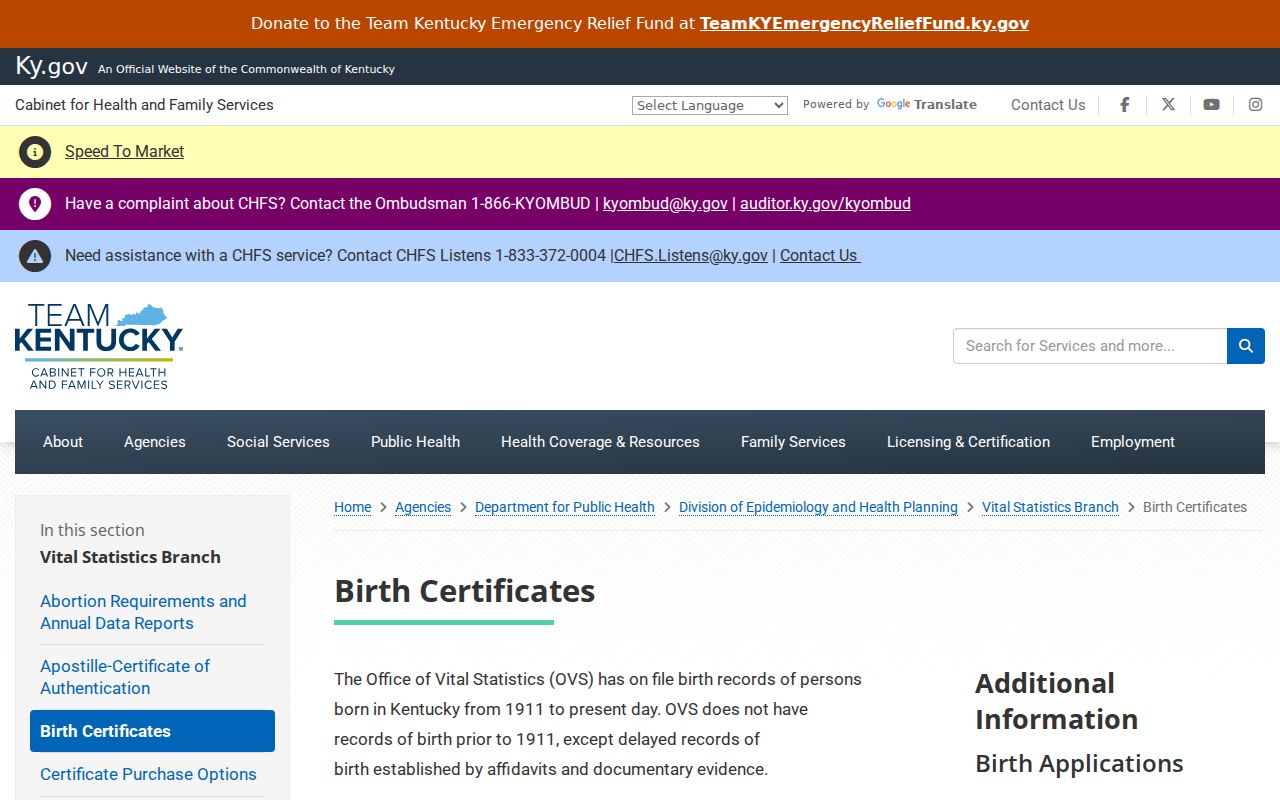
The state application route is controlled by eligibility and certificate rules, so use an index or archive source when a certified copy is unavailable.
The Kentucky death certificate page is the official route for modern death records.
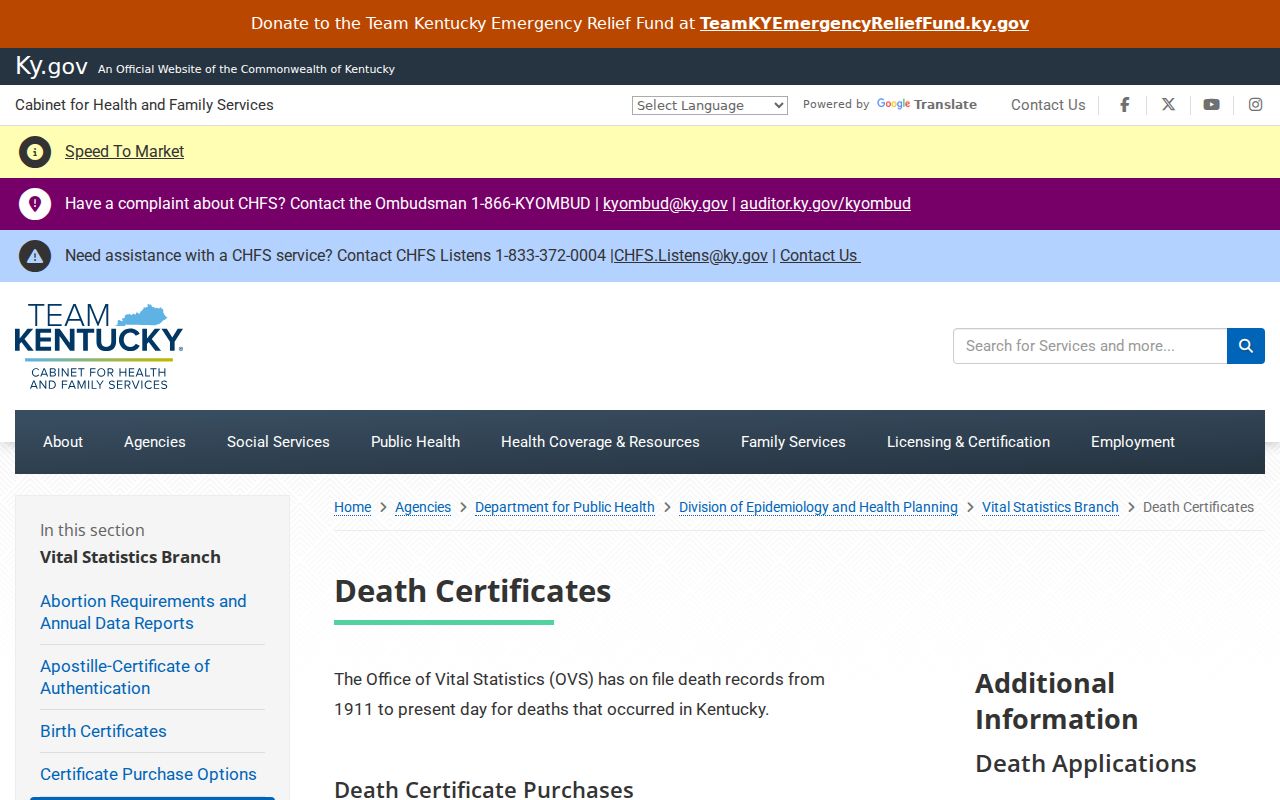
A certificate can confirm a life event, but only a separately dated address source should place that person at the Louisville property.
The Kentucky marriage and divorce records page explains the statewide route beginning in June 1958.
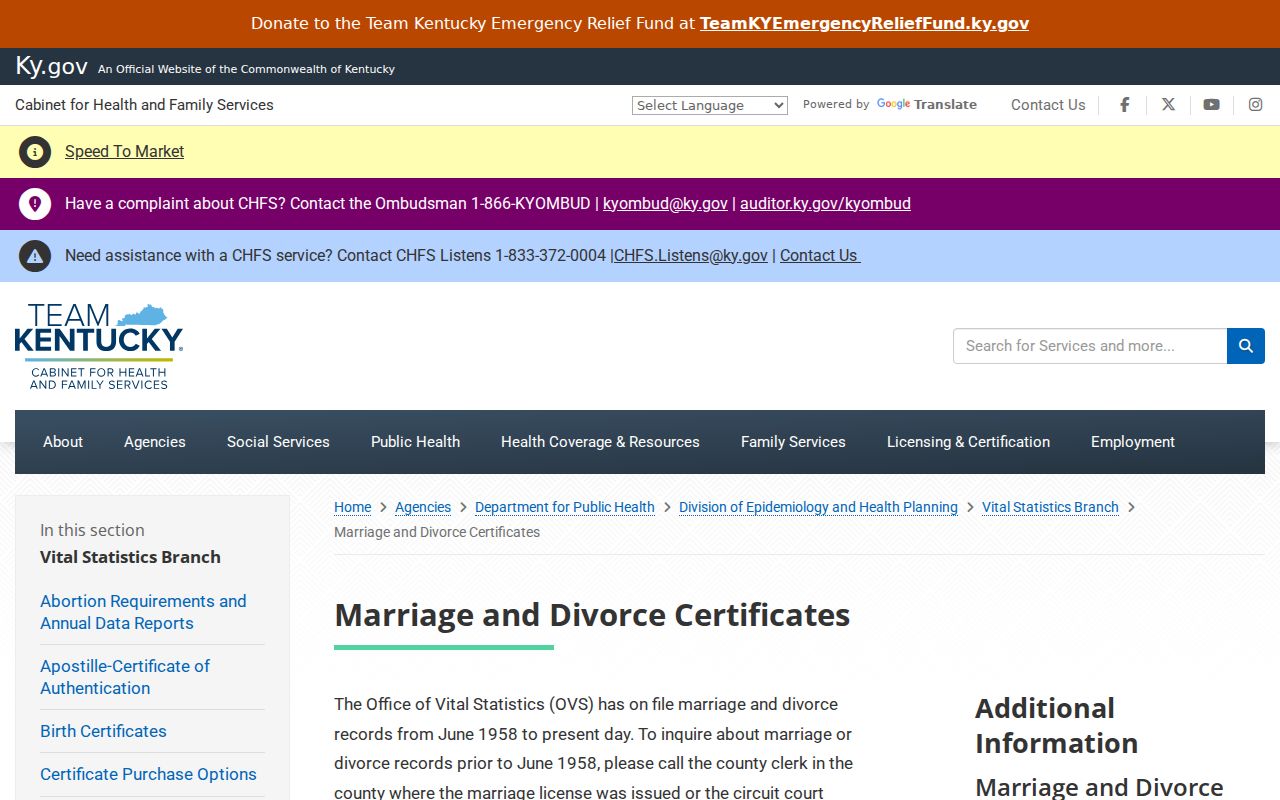
For older licenses or decrees, the county clerk or circuit clerk that handled the event is the proper fallback.
Confirm Louisville Past Households
Deeds show ownership. Directories and census schedules can reveal past residents who rented, boarded, or lived with an owner. Louisville's address-index milestone is 1884. Earlier volumes usually require a surname first, while later ones support street reading. The local collections and exact year runs are covered more fully in the Louisville city directories material.
Build a dated sequence rather than one merged household. Copy each directory entry as printed, including initials, spouse notation, occupation, address, and any boarding mark. Then pair the nearest public census year as an independent snapshot:
- Locate the address in an available directory year, using both numbers if renumbering is possible.
- Search the prior and next available volumes by both surname and street.
- Compare the nearest census schedule, while respecting the federal 72-year release rule.
- Test arrivals and departures with an obituary, deed, probate file, permit, or tax change.
LFPL supplies directory, census, newspaper, cemetery, vital-index, and obituary tools. Its Main Library Kentucky History Room is closed during renovation, but remote Ask Librarian help remains available, and branches provide library database access.
Lawful use. Research Louisville previous residents for house history, genealogy, or a family matter. Never use a historical trail to track, threaten, or harass a living person.